
By Catherine Gorman | Nutritional Therapist & Health Writer, Naturally Healthy News
Published: Oct 2025 | Last reviewed: July 2026
Creatine is a naturally occurring compound made from three amino acids that helps muscles and the brain produce energy quickly, and it remains one of the most widely researched dietary supplements in the world. Long associated with strength training and athletic performance, creatine is now understood to offer benefits well beyond the gym, including support for brain health, women’s hormonal wellbeing and healthy ageing.
That makes creatine a supplement worth considering not only for athletes, but for anyone managing stress, ageing, or the everyday demands of a busy routine.
Quick Summary
- Creatine helps regenerate ATP, the body’s main energy currency, in both muscle and brain tissue
- It supports strength, power and recovery, and may reduce mental fatigue and support memory
- Women have lower natural creatine stores than men, which may make supplementation especially relevant
- A higher dose combined with resistance training appears most effective for bone health in older adults
- Creatine monohydrate has the strongest safety record and evidence base of any form
What Is Creatine and How Does It Work?
Creatine is produced naturally in the liver, kidneys and pancreas from the amino acids glycine, arginine and methionine, and it is also found in foods such as red meat, poultry and fish. Around 95% of the body’s creatine is stored in skeletal muscle as phosphocreatine, with smaller amounts held in the brain.
How Creatine Supports ATP Production
Phosphocreatine acts as a rapid energy reserve. When cells need a quick burst of energy, such as during a heavy lift or a sprint, phosphocreatine donates a phosphate group to help regenerate adenosine triphosphate (ATP), the molecule that powers nearly every process in the body. By increasing phosphocreatine stores, creatine supplementation allows muscle and brain tissue to regenerate ATP more quickly during periods of high demand.
Creatine Benefits for Muscle Strength, Recovery and Performance
Improving strength and exercise capacity is the best-established use of creatine, and it remains the primary reason athletes and gym-goers supplement with it.
Boosting Muscle Energy During High-Intensity Exercise
During anaerobic activities such as sprinting or weightlifting, ATP is used up rapidly. Because creatine helps replenish ATP at speed, it supports peak output during these short, intense bursts of effort.
Supporting Recovery and Reducing Muscle Breakdown
Creatine draws water into muscle cells, a process known as cell volumisation, which appears to activate pathways involved in protein building and glycogen storage while reducing muscle breakdown. Some research also suggests creatine may help lower the risk of cramping and certain training-related injuries.
Creatine Benefits for Brain Health, Focus and Memory
The brain is one of the body’s most energy-hungry organs, so it is not surprising that creatine, which supports rapid ATP regeneration, has been studied for its effects on mental performance.
Reducing Mental Fatigue
A well-known trial found that healthy adults who took 8g of creatine daily for five days experienced less mental fatigue during repeated mathematical calculation tasks. Brain imaging in the same study showed a smaller task-related rise in oxygenated haemoglobin in the creatine group, which the researchers interpreted as more efficient use of oxygen in the brain.
Working Memory, Intelligence and Sleep Deprivation
In a separate six-week trial, healthy adults taking 5g of creatine daily showed measurable improvements in working memory (tested using backward digit span) and fluid intelligence (tested using Raven’s Advanced Progressive Matrices) compared with placebo. Creatine supplementation has also been shown to help offset some of the cognitive impact of sleep deprivation, and researchers have suggested it may be of particular use to anyone who is not getting consistent, quality sleep.
This same brain-energy mechanism is what has drawn researchers to look at creatine in the context of neurodegenerative conditions. For a closer look at the early pilot research in this area, see our article on creatine and Alzheimer’s disease.
Creatine and Women’s Health
Most early creatine research was conducted in men, but a growing body of evidence looks specifically at how creatine behaves in the female body. Women naturally store around 70 to 80% less creatine in their muscles than men do and tend to consume less dietary creatine overall, which researchers suggest may make supplementation particularly relevant.
The Menstrual Cycle and Hormonal Considerations
Oestrogen and progesterone both influence creatine kinase activity and the body’s own creatine production, meaning creatine metabolism shifts across the menstrual cycle, pregnancy and the menopause transition. Research on creatine supplementation timed to specific cycle phases is still developing, but reviewers note that women may benefit from the same loading and maintenance doses typically recommended for men.
Mood and Emotional Wellbeing
Depression is diagnosed roughly twice as often in women as in men, and researchers have linked this, in part, to lower levels of phosphocreatine in the female brain, particularly in the frontal lobe, an area involved in mood, memory and emotional regulation. In a clinical trial of women with major depressive disorder, adding 5g of daily creatine to standard antidepressant treatment led to greater improvement in depression scores from as early as two weeks in, compared with antidepressant treatment alone. This research was conducted in a clinical population using creatine as an adjunct to prescribed treatment, not as a standalone remedy, and anyone experiencing symptoms of depression should speak with a GP or mental health professional.
Creatine for Bone Health and Healthy Ageing
As the body ages, muscle mass, bone density and strength naturally decline, a process accelerated in women after menopause by falling oestrogen levels. Creatine has been studied as a possible countermeasure.
Muscle, Strength and Daily Function in Older Adults
In older adults, creatine supplementation combined with resistance training has consistently been shown to increase lean muscle mass, strength and performance on everyday functional tasks, such as rising from a chair or maintaining balance, beyond the effects of resistance training alone.
Bone Density: Why Dose Appears to Matter
In one of the longest studies of its kind, postmenopausal women who combined resistance training with creatine supplementation for a year saw a slower rate of bone mineral density loss in the hip, an increase in femoral shaft width (a marker of bone strength), and greater gains in upper-body strength compared with resistance training alone. Subsequent analysis across ten randomised trials suggests dose plays a key role: studies using a higher relative dose (around 0.1g per kg of body weight per day, roughly 7 to 9g) combined with resistance training were considerably more likely to show a bone benefit than those using a flat 5g daily dose. Creatine supplementation without resistance training does not appear to benefit bone density on its own.
Creatine, Metabolism and Blood Sugar
As the body ages, metabolism tends to slow and the risk of conditions such as type 2 diabetes and heart disease can rise. Building and maintaining lean muscle, which creatine supports when paired with resistance training, improves the body’s capacity to store glucose in muscle tissue as glycogen, helping sugar clear from the bloodstream more efficiently. This complements the wider dietary and lifestyle approach to glucose regulation covered in our guide to blood sugar balance.
Hydration and Creatine
Because creatine draws water into muscle cells, adequate fluid intake supports its effectiveness and helps offset the mild, temporary bloating some people notice when they begin supplementing. A helpful guide is to add an extra glass of water for each gram of daily creatine consumed.
Creatine Monohydrate vs Other Forms
Creatine monohydrate remains the most extensively researched and best-supported form of creatine. It is highly bioavailable, meaning the body absorbs it efficiently, and it has consistently demonstrated benefits for strength, endurance and recovery across decades of trials. Newer forms of creatine are marketed on claims of better absorption or fewer side effects, but none currently has a comparable evidence base, making monohydrate the most reliable choice for most people.
Who Can Benefit Most from Creatine?
Research suggests certain groups may see particularly noticeable benefits from creatine supplementation:
- Vegetarians and vegans, who typically get very little creatine from their diet
- Older adults aiming to maintain muscle, strength and cognitive function
- Women navigating menopause or high-stress periods of life
- Athletes and active individuals seeking better performance and recovery
- Anyone under sustained stress or sleep pressure who may benefit from extra brain energy support
Creatine Safety and Considerations
Creatine monohydrate is among the most thoroughly studied supplements in sports nutrition and is considered safe for most healthy adults when taken as directed. A randomised, placebo-controlled trial assessing kidney biomarkers, including newer markers of early kidney injury, found no evidence of renal harm in healthy, active adults supplementing with 3 to 5g of creatine daily.
People with pre-existing kidney disease, or any other significant health condition, should speak with a healthcare provider before starting supplementation, as should anyone who is pregnant or breastfeeding, since research in these groups remains limited.
How to Take Creatine: A Dosing Guide
There are two common approaches to creatine supplementation, both of which lead to similar increases in muscle creatine stores over time:
- Loading approach: around 20g daily (split into four 5g doses) for five to seven days, followed by a 3 to 5g daily maintenance dose
- Steady-dose approach: a consistent 3 to 5g daily, which reaches the same saturation point in roughly three to four weeks without a loading phase
For cognitive or brain-focused benefits, some studies have used a higher short-term loading dose (15 to 20g daily for three to seven days) followed by a 5 to 10g daily maintenance dose, though most people looking for general strength, recovery or healthy ageing support do well with the standard 3 to 5g daily approach.
Frequently Asked Questions
Is creatine only for bodybuilders and athletes?
No. While creatine is best known in sports and strength training contexts, current research points to benefits for brain health, women’s hormonal wellbeing, healthy ageing and everyday energy, making it relevant well beyond competitive sport.
Can women take creatine safely?
Yes. Research specifically examining creatine in women has not raised safety concerns beyond those relevant to the general population, and because women naturally store less creatine than men, some researchers suggest supplementation may be particularly useful.
Does creatine cause weight gain?
Creatine can cause a small, early increase in body weight due to water drawn into muscle cells, particularly during a loading phase. This is a reflection of increased cellular hydration rather than fat gain, and studies have not found meaningful changes in body fat percentage with creatine use.
How long does it take to notice the benefits of creatine?
Muscle creatine stores typically saturate within five to seven days using a loading approach, or three to four weeks with a steady daily dose. Strength and performance benefits generally build over several weeks of consistent training, while some cognitive effects have been observed within days under conditions of mental fatigue or sleep deprivation.
Final Thoughts: A Well-Studied Supplement With Benefits Beyond the Gym
Creatine’s reputation as a muscle-building supplement is well earned, but it undersells what the research now shows. From brain energy and mood to bone health in later life, creatine monohydrate offers a rare combination of a strong safety record and a genuinely broad evidence base.
As with any supplement, creatine works best as part of a foundation that already includes a nutrient-dense diet, regular movement and good sleep, rather than as a replacement for any of them.
References
[1] Smith-Ryan AE, Cabre HE, Eckerson JM, Candow DG. Creatine Supplementation in Women’s Health: A Lifespan Perspective. Nutrients. 2021;13(3):877. https://pmc.ncbi.nlm.nih.gov/articles/PMC7998865/
[2] Rawson ES, Venezia AC. Use of creatine in the elderly and evidence for effects on cognitive function in young and old. Amino Acids. 2011;40(5):1349-62. https://pubmed.ncbi.nlm.nih.gov/21394604/
[3] Watanabe A, Kato N, Kato T. Effects of creatine on mental fatigue and cerebral hemoglobin oxygenation. Neuroscience Research. 2002;42(4):279-285. https://pubmed.ncbi.nlm.nih.gov/11985880/
[4] Rae C, Digney AL, McEwan SR, Bates TC. Oral creatine monohydrate supplementation improves brain performance: a double-blind, placebo-controlled, cross-over trial. Proc Biol Sci. 2003;270(1529):2147-50. https://pmc.ncbi.nlm.nih.gov/articles/PMC1691485/
[5] Lyoo IK, Yoon S, Kim TS, et al. A randomized, double-blind placebo-controlled trial of oral creatine monohydrate augmentation for enhanced response to a selective serotonin reuptake inhibitor in women with major depressive disorder. Am J Psychiatry. 2012;169(9):937-45. https://pubmed.ncbi.nlm.nih.gov/22864465/
[6] Chilibeck PD, Candow DG, Landeryou T, Kaviani M, Paus-Jenssen L. Effects of Creatine and Resistance Training on Bone Health in Postmenopausal Women. Med Sci Sports Exerc. 2015;47(8):1587-95. (Summarised within reference 1 above.)
[7] Forbes SC, Ostojic SM, Souza-Junior TP, Candow DG. A High Dose of Creatine Combined with Resistance Training Appears to Be Required to Augment Indices of Bone Health in Older Adults. Ann Nutr Metab. 2022;78(3):183-186. https://karger.com/anm/article/78/3/183/821423
[8] de Oliveira Vilar Neto J, et al. Novel renal biomarkers show that creatine supplementation is safe: a double-blind, placebo-controlled randomized clinical trial. Toxicol Res (Camb). 2020;9(3):263-270. https://pubmed.ncbi.nlm.nih.gov/32670557/
[9] Roschel H, Gualano B, Ostojic SM, Rawson ES. Creatine Supplementation and Brain Health. Nutrients. 2021;13(2):586. https://pubmed.ncbi.nlm.nih.gov/33578876/
Disclaimer: The information in this article is intended for general informational purposes only and does not constitute medical advice. It is not a substitute for professional medical advice, diagnosis, or treatment. Always seek the advice of your GP or a qualified healthcare provider with any questions you may have regarding a medical condition, medication, or supplement use, especially if pregnant, breastfeeding, or managing a kidney condition. Never disregard professional medical advice or delay seeking it because of something you have read here.
Our Recommendation
Naturally Healthy News is part of the Good Health Naturally family of brands.
For anyone looking to add creatine to their routine, GHN Creatine Monohydrate offers a pure, well-researched form of the supplement discussed throughout this article, at a standard daily dose that fits easily into a morning routine or post-workout shake.
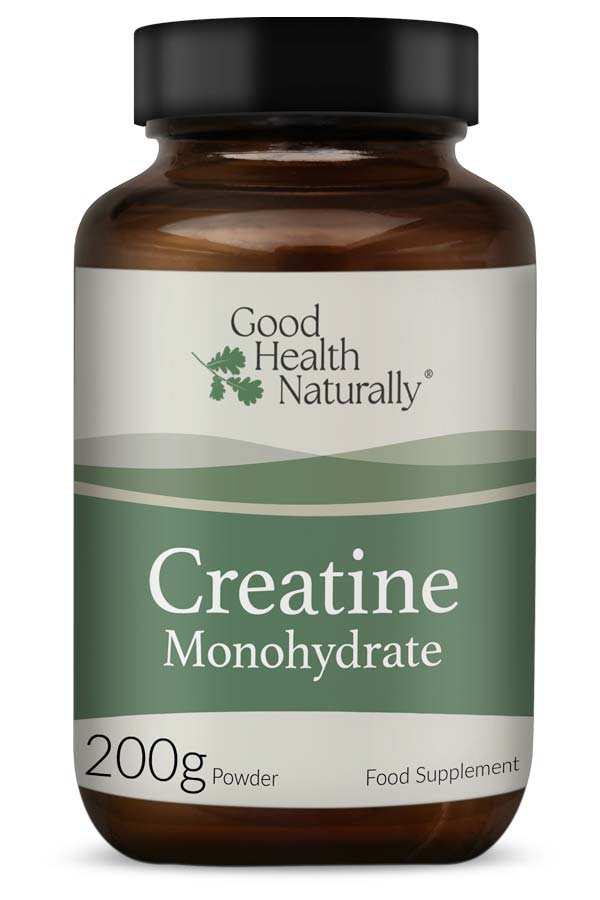
Creatine Monohydrate Powder
Pure Creatine Monohydrate provides daily support for strength and movement.